


Anonymous Texting
3.7286.00 Reviews
App Specs
- Version
- 2.0.1
- Updated On
- License
- Free
- Downloads
- 100,000+
- Developer
- Mathrawk
- Categories
- Communication
- Platform
- Android
Screenshots
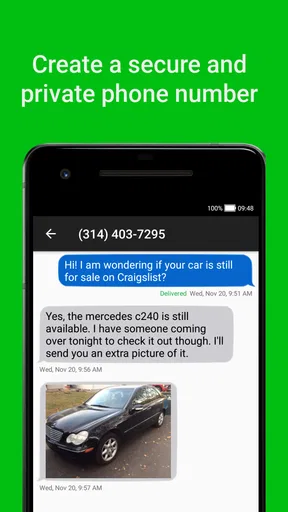
 Analysis by AppCompare
When I first looked at Anonymous Texting, I treated it less like a normal messaging app and more like a narrow communication tool. Its purpose is clear: it helps you keep your real number away from people you do not fully trust. That makes the app interesting for temporary conversations, public-facing contact, and situations where sharing a personal phone number feels unnecessary.
The important question is not whether anonymous texting sounds useful. It is whether this particular approach fits the way you communicate. I would not replace a full messaging service with it, and I would not use it as my only channel for important conversations. I would consider it when separation matters more than having a rich collection of chat features.
Mathrawk is the developer behind this free communication app, which is rated for Everyone. It has reached over one hundred thousand installs and holds an average rating of 3.7 from more than seven hundred ratings. Those figures suggest a real audience, but also a mixed experience, so I approached it as a practical utility rather than something to recommend automatically to everyone.
How I decided whether it was useful
My first decision criterion was control over identity. With ordinary texting, your phone number is usually the starting point of the conversation. That is convenient, but it also creates a direct connection to your personal contact details. Anonymous Texting is appealing when I want the conversation to exist without immediately handing over that connection.
The second criterion was the kind of conversation involved. This is better suited to a short-lived exchange than to a permanent social home. If I am arranging a one-time pickup, answering questions from someone I do not know, or creating a temporary line for contact, keeping my main number private can be more valuable than having stickers, group communities, media galleries, or elaborate profile tools.
The third criterion was trust. Privacy and anonymity are not the same thing, and I would not confuse a hidden personal number with complete invisibility. The person on the other end may still recognize my writing style, know the context, or receive information through the conversation itself. I use the app as a layer of separation, not as a promise that every part of communication disappears.
That distinction is one of the most useful things to understand before installing it. Someone looking for a secure, feature-rich private messenger may be happier with a service designed around encrypted conversations and established contacts. Someone who simply wants to avoid exposing a personal number has a different need. Anonymous Texting speaks more directly to the second group.
Worth Reading Before You Choose

EA SPORTS FC Mobile 26 Is a Bigger Football Game, but It Takes Time

Flipboard Shows What News Apps Must Do Beyond the Feed

Switching to Android Auto Means Rethinking Your Driving Routine

Google Calendar Makes a Crowded Week Easier to Manage

Ludo King Makes the Most of the Minutes Between Plans

Baby Panda World Brings Quick Play to Modern Phones, but Its Game Library Feels Busy
The first setup decision matters more than it seems
Before using it, I would decide what role the app is going to play. If it is for a single transaction or a temporary contact, I would keep the conversation focused and avoid treating the number as a permanent identity. If it is for repeated communication, I would think carefully about whether the extra separation is worth managing another communication channel.
This is also where I would set expectations with the other person. Anonymous contact can look suspicious if it arrives without context. A short explanation such as “I prefer not to share my personal number yet” makes the arrangement feel deliberate instead of evasive. That small step can prevent the app from creating the very confusion it is meant to avoid.
A practical tip is to avoid putting sensitive personal details into a conversation simply because the number is separated. The app can reduce exposure of one identifier, but it does not remove the need for ordinary caution. I would still check names, links, meeting details, and requests for money in the same way I would with any unfamiliar contact.
Where the app wins against ordinary texting
The clearest strength is the boundary it creates around a personal phone number. With standard texting, giving someone a way to reach you often means giving them a direct route to your everyday identity. Anonymous Texting is more useful when I want to keep that route separate from family, work, banking, delivery accounts, and other services tied to my normal number.
That makes it particularly suitable for public or semi-public contact. Imagine selling a piece of furniture locally. I may want to answer questions and arrange a meeting, but I may not want a stranger to retain my personal number afterward. A separate texting route gives me more room to handle the exchange without making my main contact details part of the transaction.
The same logic applies to community activities. A volunteer organizer, tutor, event helper, or small seller may need to communicate with people outside an established circle. A separate contact channel can reduce the pressure to make a personal number visible to everyone involved. It is not a replacement for a proper organization account, but it can be a useful middle ground for informal arrangements.
I also see value in testing a new contact before moving to a more permanent channel. If a conversation develops naturally and trust grows, I can decide later whether the person should receive my usual number. That reverses the normal order of communication: instead of giving access first and setting boundaries later, I can start with a boundary and relax it only when it makes sense.
The strongest use is temporary separation, not total secrecy. That is the trade-off I would keep in mind. The app wins when the problem is “I do not want to expose my regular number yet.” It is less convincing when the problem is “I need a complete private communications system with advanced controls.”
Small workflow advantages that are easy to overlook
One useful workflow is to treat the app as a screening stage. I can use the separate channel for initial questions, confirm that the person is genuine, and move to my normal messaging setup only if the interaction becomes worthwhile. This is especially sensible when a conversation begins through a public listing, an unfamiliar service inquiry, or a casual introduction.
Another is reducing the cost of changing my mind. If a temporary contact becomes annoying, inappropriate, or simply no longer necessary, the separation makes it easier to stop using that route without disrupting the number connected to everything else in my life. I would still review the app’s available controls before relying on this workflow, but the concept is valuable even before advanced management becomes relevant.
A third insight is that anonymity can improve communication discipline. Because I do not want to blur personal and temporary contacts, I am more likely to keep messages concise, record the purpose of the exchange, and avoid sending information that belongs in a long-term conversation. That makes the app better for defined tasks than for aimless chatting.
Where another type of app may fit better
Anonymous Texting is not automatically better than ordinary SMS, mainstream chat apps, or privacy-focused messengers. Each category solves a different problem. Standard texting is usually the easiest choice when I already know and trust the recipient, need a familiar experience, and do not mind sharing my regular number.
A mainstream chat platform may be a better fit for ongoing conversations, groups, photos, voice messages, and social coordination. Those services often make it easier to find contacts and continue a conversation across devices. If I am planning a trip with friends or managing a family discussion, the simplicity of everyone using the same established platform can outweigh the privacy benefit of a separate anonymous channel.
A privacy-focused messenger may be preferable when the central requirement is protecting message content and conversation security, rather than merely hiding a phone number. I would choose that category for sensitive discussions with trusted contacts, especially when both people are willing to use the same service and follow its privacy model.
A second-number or business-oriented communication service may also suit someone who needs a stable public identity. For example, a freelancer who speaks with clients every week may want a professional number that remains consistent, has dependable account management, and fits into a broader work routine. Anonymous Texting makes more sense for flexible, limited contact than for building a long-term customer desk.
There is also a social trade-off. People are more likely to answer a familiar contact method than an unexpected anonymous message. If the recipient does not recognize the context, the privacy advantage may reduce response rates or create doubt. I would introduce myself clearly and explain why I am using a separate number. For urgent or official matters, I would use a channel the recipient already trusts.
Who should skip it
I would skip this app if I wanted a full replacement for my everyday messenger. The store summary is focused on protecting a real number, and that focus is exactly what makes the app understandable. It does not give me a reason to abandon a mature messaging ecosystem that already handles my regular contacts, group conversations, and shared media.
I would also skip it if I needed a guaranteed business workflow. A temporary identity can be useful for early contact, but customers may need reliable continuity, clear support arrangements, and a stable way to reach the same person. In that situation, a dedicated business communication option is probably the more responsible choice.
Finally, I would not choose it as a shortcut for risky or abusive behavior. Keeping a personal number private is reasonable; using anonymity to harass, deceive, or evade accountability is not. The app’s Everyone age rating makes it broadly accessible, but younger users in particular should understand that anonymous contact still requires judgment and adult guidance when strangers are involved.
Cost, purchases, and the effort of switching
The app is free to install, which makes trying its basic idea relatively easy. It also includes in-app purchases ranging from under a dollar to almost one hundred dollars per item. I would not assume that every user needs to spend money, and I would look closely at what each purchase changes before committing. The wide range means the financial decision deserves more attention than the free label alone suggests.
The real cost of switching is often organizational rather than financial. I would need to tell selected contacts which channel to use, remember which conversations belong there, and avoid accidentally sending private information from the wrong account. If I stop using the app later, I may need to redirect people again. That friction is manageable for temporary projects but becomes tiring when the app is used as a permanent second inbox.
My advice is to start with one clearly defined use case instead of moving every conversation at once. For example, I might use it for local sales inquiries for a short period, assess whether the separation helps, and then decide whether it deserves a larger role. This keeps the experiment understandable and prevents a temporary privacy tool from becoming another communication obligation.
Version 2.0.1 supports devices running Android 8.0 or later. That makes the compatibility question straightforward for many Android users, although I would still check the device before planning to depend on it for an important exchange. The app was released on January 11, 2020, so I would pay attention to how comfortable its current experience feels on my particular phone rather than assuming that age alone tells me whether it is suitable.
What I would check before relying on it
I would first test the complete path with someone I trust. I would confirm that I can send and receive messages as expected, understand which identity the recipient sees, and find the controls I need before using the app with a stranger. A short test can reveal more useful information than installing it immediately before an important appointment.
I would then decide how I will organize the contact. If the conversation is temporary, I would save enough context to recognize it without exposing more personal information than necessary. I would also avoid assuming that an anonymous channel should be used for passwords, financial details, identity documents, or anything that needs a formal record.
I would pay attention to the recipient’s experience too. Privacy tools work best when both sides understand the arrangement. Clear introductions, a specific reason for contact, and a defined end point make the exchange feel safer and more professional. Without those habits, the app may protect my number while making the conversation harder to trust.
My recommendation after using it as a decision tool
I recommend Anonymous Texting to Android users who need a simple buffer between their personal number and a temporary or unfamiliar contact. It is a sensible option for local transactions, short projects, early-stage introductions, and public-facing communication where I want to stay reachable without making my everyday number permanent in someone else’s phone.
I would not recommend it as a universal messaging replacement. If your priority is rich group communication, established social features, business continuity, or deeper conversation privacy, another category will probably serve you better. The app’s value depends on a very specific need, and that is not a weakness when the need is genuinely yours.
The average rating of 3.7 shows that the experience is not perfect for everyone, and I would treat that as a reason to test it rather than dismiss it. The free entry point lowers the barrier, while the optional purchase range means I would review any upgrade carefully. Mathrawk has built a focused communication app, not an all-purpose social network.
My final advice is to use it deliberately: choose one boundary you want to create, explain the separate contact method to the other person, keep sensitive information out of casual exchanges, and reassess once the temporary need ends. If protecting your real number is the main problem, this app can be a practical answer. If your needs extend beyond that, I would switch categories instead of forcing Anonymous Texting to do a job it was not designed to handle.
Pros
- Send messages without revealing your personal phone number.
- Simple interface makes anonymous texting quick to set up.
- Useful for privacy-focused conversations and temporary contact.
- Works well for sending short messages with minimal setup.
- Can help separate personal communication from other contacts.
Cons
- Anonymous messages may be blocked or filtered by some carriers.
- Recipients might distrust texts from unidentified senders.
- Privacy depends on the app’s data handling and permissions.
- Some features may require payment or impose usage limits.
- Misuse can lead to harassment
- scams
- or account restrictions.
FAQs for Anonymous Texting
What is Anonymous Texting, and how does it work?
Anonymous Texting is an app designed to let users send text messages without immediately revealing their personal phone number or identity to the recipient. After installing it, you typically choose a destination number, write your message, and send it through the service. Features and anonymity levels can vary, so users should review the app’s privacy policy and understand what information may still be collected or accessible.
Can Anonymous Texting messages really not be traced?
No messaging service should be considered completely untraceable. Although the recipient may not see your regular phone number, the app or its service provider may retain technical information such as IP addresses, device details, account data, payment records, or message logs. Information could also be disclosed when legally required. Use the app responsibly and never assume anonymity protects unlawful, threatening, or abusive communication.
Is Anonymous Texting free to use?
Anonymous Texting may offer free downloads, but sending messages can involve credits, subscriptions, advertising, or in-app purchases. Some services limit the number of messages available without payment, while others charge based on the destination or message type. Before sending anything, check the current pricing shown in the app store and inside the application, including automatic-renewal terms for subscriptions.
Is Anonymous Texting safe and private?
The app can be useful for situations where you want to keep your personal number private, but privacy depends on how the service handles data and secures communications. Check requested permissions, encryption information, retention policies, and whether your messages are stored. Avoid sharing passwords, financial details, or sensitive personal information, and be cautious when replying to unknown contacts or links.
Can Anonymous Texting be used to contact anyone, and are there limitations?
Service availability can depend on the recipient’s country, mobile carrier, phone type, and local messaging regulations. Some numbers, including short codes, premium-rate lines, landlines, or blocked destinations, may not accept messages. Providers can also restrict spam, harassment, impersonation, or repeated unwanted contact. Confirm that the intended recipient can receive the message and use the application only for legitimate, respectful communication.


